Monday, August 30, 2021

Be optimistic

 "It's the news' job to make you anxious & angry. Underlying scientific, economic, education & conflict trends are positive. Stay optimistic."


Monday, August 23, 2021

another problem with groupthink

Lots of large organizations suffer from the problem of groupthink, with leaders who dislike controversy and want everyone to "get along" and reach "consensus." This article from the WSJ is a good illustration.

https://www.wsj.com/articles/american-jobs-plan-rescue-bipartisan-infrastructure-deal-europe-economy-taxation-spending-welfare-social-security-inflation-11629646866?mod=hp_opin_pos_4


All the President’s Yes-Men

JFK remade his decision-making process after the Bay of Pigs debacle. Biden could learn something.

Wednesday, February 03, 2021

No battery fairy

 This seems self-evident, except to politicians and idealistic environmentalists.

First:

https://www.americanthinker.com/blog/2021/02/the_battery_fairy_and_other_delusions_in_the_demand_to_replace_gasoline_powered_vehicles_with_electric_cars_and_trucks.html

The ‘battery fairy’ and other delusions in the demand to replace gasoline powered vehicles with electric cars and trucks


Read more: https://www.americanthinker.com/blog/2021/02/the_battery_fairy_and_other_delusions_in_the_demand_to_replace_gasoline_powered_vehicles_with_electric_cars_and_trucks.html#ixzz6lTewchI1
Follow us: @AmericanThinker on Twitter | AmericanThinker on Facebook


I continue to be amazed that serious people think that gasoline powered vehicles can be completely replaced by electric vehicles in a decade-and-a-half, and that this would be a good thing, even if possible. Under threat of government action, however, the world’s major auto manufacturers are falling in line boosting production of plug-in models, and upstart Tesla Motors is now the world’s most valuable auto manufacture, based on the value of its capital stock issued and in the public’s hands. Mary T. Barra, CEO of General Motors, has pledged to sell only zero emission vehicles by 2035.  That would meet the deadline imposed by California Governor Gavin Newsom, who signed an executive order banning the sale of internal combustion vehicles in the nation’s largest car market by 2035.

GM, rescued from liquidation courtesy of US taxpayers (and bondholders who were cheated out of their place in line as creditors by the Obama administration), may simply be sucking up to governmental power. But Akio Toyoda, CEO of Toyota Motors, the world’s largest (or second largest, depending on the year). and grandson of the automaker’s founder, has spoken out and called out fallacy of thinking that this is possible or desirable. [I must here disclose that I was a consultant for a Toyota company for several years, but that all my comments on the company here are based on publicly available information.]

According to this account in CarBuzz:

As the grandson of Toyota founder, Kiichiro Toyoda, the scion was raised surrounded by all aspects of the auto industry and his business acumen is second to none. So when he had some harsh words for electric vehicles at the Japan Automobile Manufacturers Association end-of-year press conference last week, people took notice.

The Wall Street Journal was in attendance and noted the CEO's disdain for EVs boils down to his belief they'll ruin businesses, require massive investments, and even emit more carbon dioxide than combustion-engined vehicles. "The current business model of the car industry is going to collapse," he said. "The more EVs we build, the worse carbon dioxide gets… When politicians are out there saying, 'Let's get rid of all cars using gasoline,' do they understand this?"

Studies detailing the carbon emissions necessary to manufacture an electric vehicle reveal that on a net basis, there are more emissions for vehicle bought and used for its expected lifetime, than would be generated by buying and using a conventional gasoline-powered vehicle.

Toyota can certainly make electric powered vehicles. It introduced the hybrid Prius, after all, and has a strong position in that market. Toyota’s mastery of the discipline of mass production of vehicles is such that it could do well no matter what power source is used. But the costs of complete conversion to electricity-powered vehicles are mind boggling.

Where will all, the electricity needed to power to entire fleet of cars in the US (or Japan) come from? Despite the fantasies of greenies, it won’t be from windmills or solar farms. They are too unreliable, take up too much land, and cost too much. Right now, it is coal and natural gas that produce the most electricity at the most reasonable cost.  And they emit CO2. Plus, there is considerable loss of power due to resistance in the transmission lines, requiring an even greater amount of gross power before the net power reaches the battery in the vehicle, charging at the user’s home ort some other location.  Nuclear power does offer some potential, but how many people want to live near the hundreds and hundreds of nuclear power plants that would be required to fuel the nation’s vehicles?

Then there is the small matter of batteries. The very large batteries needed for electric cars use lots of expensive lithium (and some other rare elements) whose supply is limited, and whose mining requires lots of scarce water. In fact, powering the world’s vehicles by battery is simply impossible, given the limited world supply of lithium, as this clever post by Powerline’s Steve Hayward makes clear. The title gives away the punchline:


Read more: https://www.americanthinker.com/blog/2021/02/the_battery_fairy_and_other_delusions_in_the_demand_to_replace_gasoline_powered_vehicles_with_electric_cars_and_trucks.html#ixzz6lTefyaec
Follow us: @AmericanThinker on Twitter | AmericanThinker on Facebook

Then:

https://www.powerlineblog.com/archives/2021/01/who-will-tell-the-greens-there-is-no-battery-fairy.php

WHO WILL TELL THE GREENS THERE IS NO BATTERY FAIRY?

For the longest while I have been asking, “Where do environmentalists and Democrats think all these batteries for our oil-free transportation fleet are going to come from?” It seems they think there is a Battery Fairy out there somewhere who will magically supply the ginormous battery capacity, and additional supply of electricity to charge them, in order to deliver us to our blessed fossil-fuel-free future.

So kudos to Wired magazine on “The Spiraling Environmental Cost of our Lithium Battery Addiction,” which reminds us that there are, you know, tradeoffs between various kinds of energy systems we might use:

Demand for lithium is increasing exponentially, and it doubled in price between 2016 and 2018. According to consultancy Cairn Energy Research Advisors, the lithium ion industry is expected to grow from 100 gigawatt hours (GWh) of annual production in 2017, to almost 800 GWhs in 2027. . .

But there’s a problem. As the world scrambles to replace fossil fuels with clean energy, the environmental impact of finding all the lithium required to enable that transformation could become a serious issue in its own right. “One of the biggest environmental problems caused by our endless hunger for the latest and smartest devices is a growing mineral crisis, particularly those needed to make our batteries,” says Christina Valimaki an analyst at Elsevier. . .

It’s a relatively cheap and effective process, but it uses a lot of water – approximately 500,000 gallons per tonne of lithium. In Chile’s Salar de Atacama, mining activities consumed 65 per cent of the region’s water. That is having a big impact on local farmers – who grow quinoa and herd llamas – in an area where some communities already have to get water driven in from elsewhere. . .

Two other key ingredients, cobalt and nickel, are more in danger of creating a bottleneck in the move towards electric vehicles, and at a potentially huge environmental cost. Cobalt is found in huge quantities right across the Democratic Republic of Congo and central Africa, and hardly anywhere else. The price has quadrupled in the last two years.

There’s lots more in the whole article, including the problem of disposal or recycling of used batteries.

Wednesday, January 27, 2021

8 ancient ruins I've visited

I've visited all of these sites and I agree, they are awe-inspiring.

https://mymodernmet.com/best-ancient-ruins/

8 of the World’s Most Awe-Inspiring Ancient Ruins

  •  
  •  
Ancient Ruins Around the World

Today, there are plenty of ways we can get a glimpse into the past. Looking at old photos and gazing at artifacts in museums can help us learn about history, but the best way to feel like you're really time traveling is by setting foot on age-old sites.

Jet-setting across the globe to sightsee is not entirely feasible for most people, but luckily we live in an age when you're only a few clicks away from seeing the other side of the world. So if you're ready to take a trip around the world, we've put together a list of 8 awe-inspiring ancient ruins that you can excavate and explore from the comfort of your home.


Ta Prohm, Cambodia

Ta Prohm Ruins Ta Prohm Temple

Stock Photos from Jose Ignacio Soto/Shutterstock

Ta Prohm is a temple located in Angkor, Cambodia. Intended to serve as both a Buddhist monastery and a center of learning, the structure was built in the late 12th century by Jayavarman VII, a king of the Khmer Empire.

Nestled deep in the jungle and largely abandoned by the 15th century, Ta Prohm is renowned for the beautifully overgrown state of its crumbling complex. As its stones were set without mortar, the roots and branches of nearby silk-cotton, strangler fig, and gold apple trees have twisted through and toppled them, culminating in a scene straight out of any archaeologist's wildest dreams.


El Castillo, Mexico
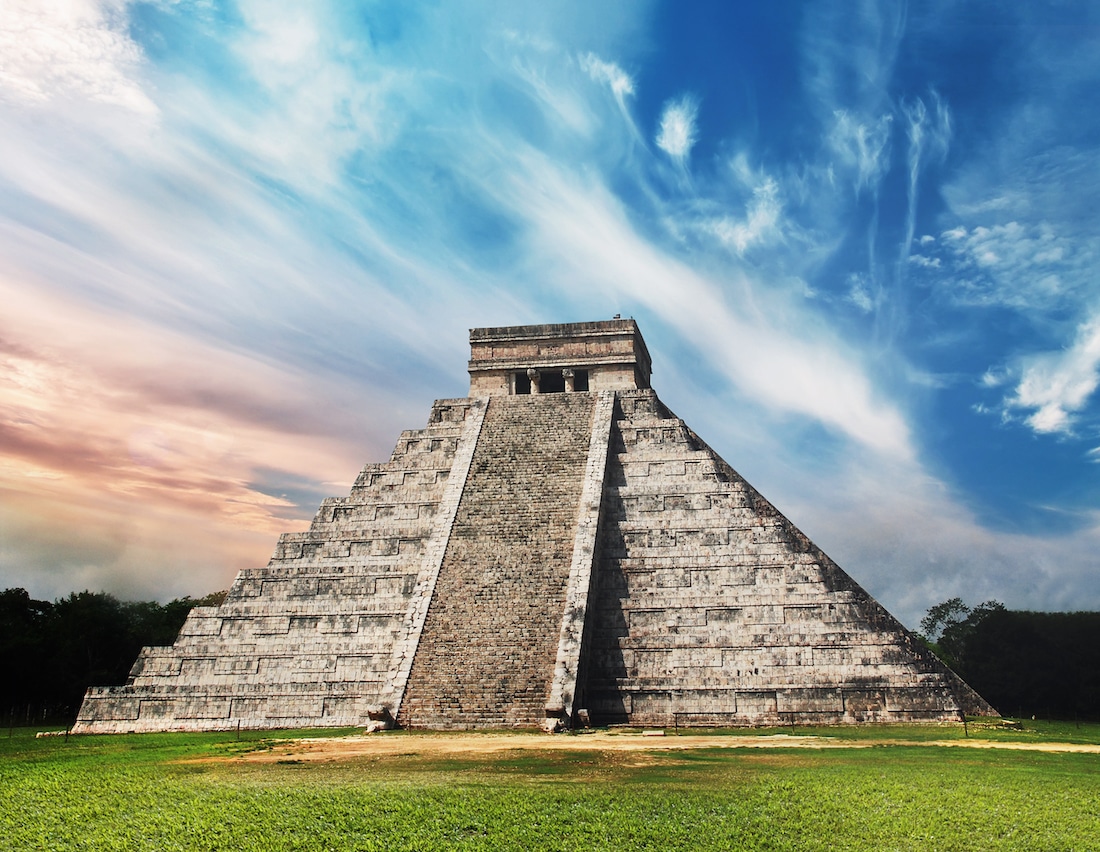
Ancient Mayan Ruins Ancient Ruins in Mexico

Stock Photos from FCHM/Shutterstock\

El Castillo, a mesmerizing Mesoamerican step-pyramid, is at the heart of Chichen Itza. Chichen Itza is a pre-Columbian city constructed by the Maya people in Yucatán, Mexico, between the 9th and 12th centuries.

With a towering height of 98 feet and a name that translates to “the castle,” it's no wonder that El Castillo is considered one of the New Seven Wonders of the World. What makes the monument even more enchanting, however, is revealed only twice a year: at about 3 pm on the spring and autumn equinoxes, the sunlight hits the pyramid's main stairway in such a way that the shadows form a snake-like form. This slithering shadow “creeps downwards until it joins the huge serpent's head carved in stone at the bottom of the stairway” (Chichen Itza).


Bagan, Myanmar

Bagan Temples Ancient Ruins

Stock Photos from Martin M303/Shutterstock

Bagan is an ancient city in the Mandalay Region of Myanmar. At its height, Bagan was home to over 10,000 Buddhist temples, shrines, and pagodas. While this number has declined over the last millennium, roughly 2,000 of these glistening gold structures still remain today, making Bagan one of the continent's must-see marvels.

“The thousands of temples that are spread across the plains of Bagan are the most impressive testament to the religious devotion of Myanmar’s people–and rulers–over the centuries,” Go-Myanmar explains. “They combine to form one of the richest archaeological sites in Asia and provide views quite unlike anywhere else on earth.”


Stonehenge, England
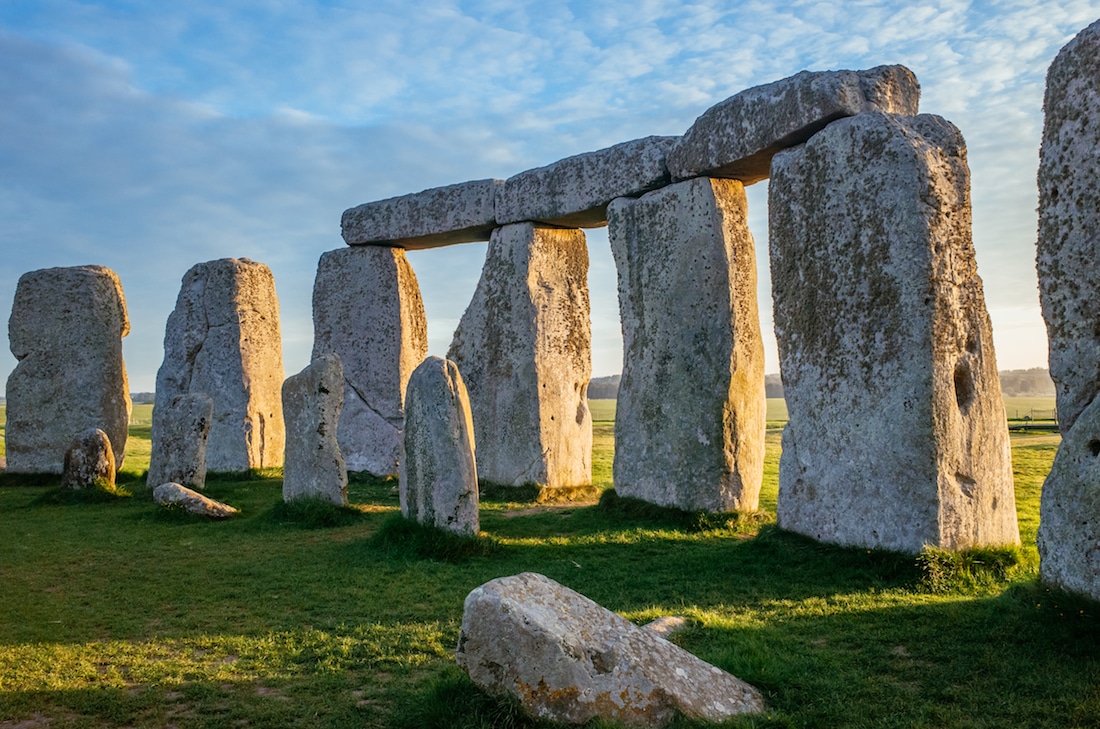
Stonehenge Ancient Ruins

Stock Photos from Brian C. Weed/Shutterstock

Constructed from 3000 through 1500 BCE, Stonehenge is one of the world's most famous pre-historic monuments. Located in Wiltshire, England, the unique structure is made up of two types of stone—the bigger being sarsen and the smaller being a bluestone—and arranged concentrically.

Today, Stonehenge remains shrouded in mystery. While no one is certain why the monument was built, several theories exist, with ideas that it served as a solar calendar, a center of Pagan worship, or an ancient burial ground among the most popular.


Luxor Temple, Egypt
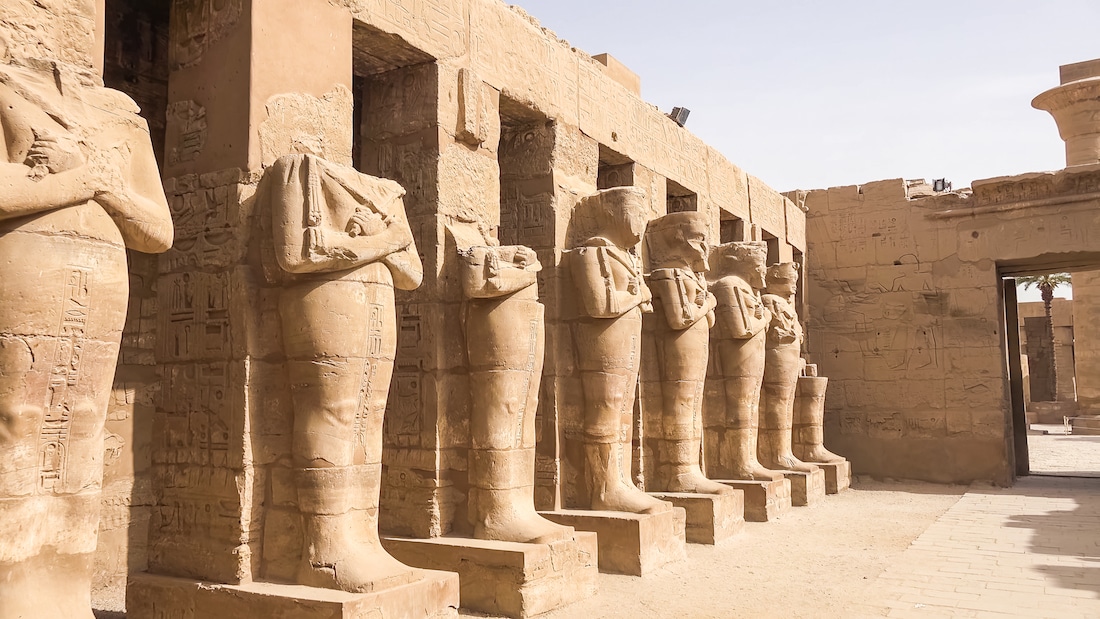
Egypitan Ruins Luxor Temple Ancient Egypt

Stock Photos from amin esmat.jordan/Shutterstock

Often referred to as “the world's greatest open-air museum,” Luxor, Egypt, has no shortage of ancient ruins to explore. After all, this city is home to Luxor Temple, a famous complex constructed way back in 1400 BCE.

Formally the site of the Thebes, the “City of a Hundred Gates,” Luxor is steeped in Egyptian history. “It was from here that Thutmose III planned his campaigns, Akhenaten first contemplated the nature of god, and Rameses II set out his ambitious building program” (Discovering Egypt). Luxor Temple epitomizes the city's pharaoh-ly focus, as it was the only temple in Thebes dedicated not to gods, but to the kingship.


Pompeii, Italy

Pompeii Ruins Ancient Ruins in Italy

Stock Photos from Darryl Brooks/Shutterstock

The ancient city of Pompeii is one of Italy's most interesting destinations. Once a vibrant Roman center, Pompeii was destroyed by a devastating eruption from the nearby Mount Vesuvius in 79 CE.

While the cloud of smoke from this cataclysmic event buried everything in its path—including, unfortunately, 2,000 people— it also ironically preserved the city. Hidden by a blanket of ash and lapilli (fragments of pumice stone), Pompeii remained forgotten for centuries. In 1748, however, it was properly excavated, revealing a wealth of intact art, artifacts, and buildings—all of which can still be seen today.


Machu Picchu, Peru
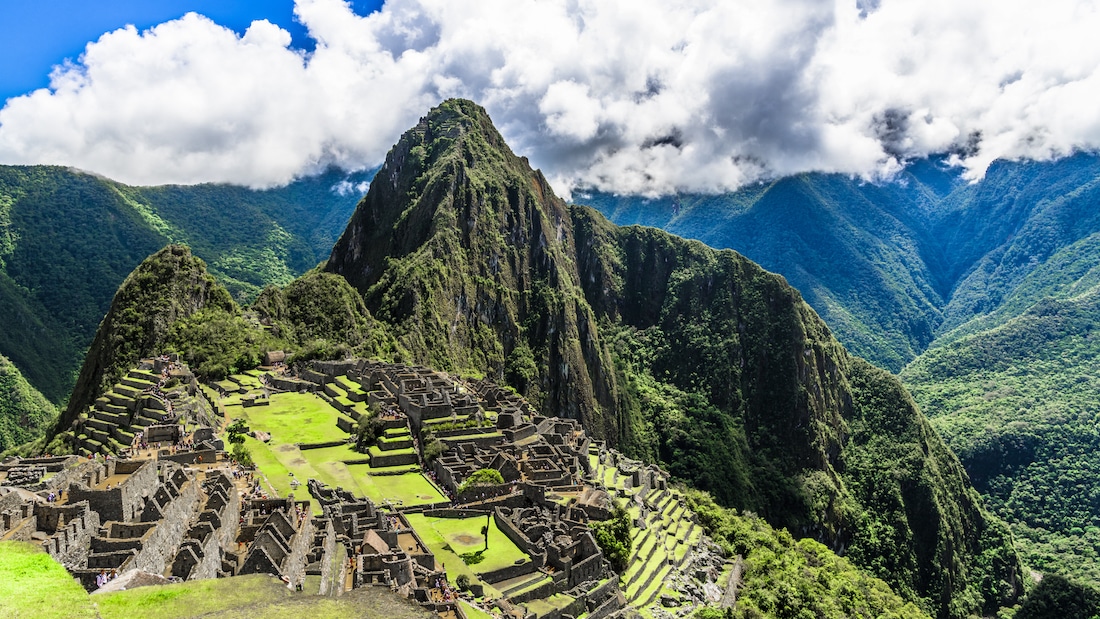
Machu Picchu Peru Machu Picchu Ruins Ancient Ruins

Stock Photos from Ivan_off/Shutterstock

Located high in the clouds above Peru's Sacred Valley, Machu Picchu is one of South America's most spectacular sites. This Inca citadel was built in the 15th century and was likely intended as an estate for an emperor.

Machu Picchu comprises three main focal points: Intihuatana, a ritual stone related to the Inca's astronomical clock; the Temple of the Sun, a sacred site for worship; and the Room of the Three Windows, which offers stunning views of the sunrise. As these structures—as well as much of Machu Picchu—have been meticulously restored, visitors are able to get a glimpse of what it would have looked like hundreds of years ago.


Petra, Jordan

Petra Ruins Ancient Ruins

Stock Photos from Aleksandra H. Kossowska/Shutterstock

Petra, a city built in the 4th century BCE, is unlike any other site on earth. Carved into the region's red sandstone cliffs, Petra's jaw-dropping structures beautifully blur the line between the natural and constructed world.

Because of the pink hue of its rock-cut architecture, Petra is often referred to as Rose City—a romantic nickname rooted in a 19th-century poem by John William Burgon: “The hues of youth upon a brow of woe, which Man deemed old two thousand years ago, match me such marvel save in Eastern clime, a rose-red city half as old as time.”


Related Articles:

7 Medieval European Sites You Can Actually Visit Today

Unearthing the Importance of the Life-Sized Terracotta Warriors

Dazzling Elements of Ancient Islamic Architecture We Still See Today

Animated GIFs ‘Reconstruct’ Famous Ancient Ruins Around the World

KELLY RICHMAN-ABDOU

Kelly Richman-Abdou is a Contributing Writer at My Modern Met. An art historian living in Paris, Kelly was born and raised in San Francisco and holds a BA in Art History from the University of San Francisco and an MA in Art and Museum Studies from Georgetown University. When she’s not writing, you can find Kelly wandering around Paris, whether she’s leading a tour (as a guide, she has been interviewed by BBC World News America and France 24) or simply taking a stroll with her husband and two tiny daughters.

Read all posts from Kelly Richman-Abdou 

Monday, January 25, 2021

COVID vaccines

 Bill Gates explains the COVID vaccines clearly here:

https://www.gatesnotes.com/About-Bill-Gates/Year-in-Review-2020

Some people think it's all a conspiracy, but I'm not among them. That said, Gates seems to go out of his way to downplay the role of the Trump administration in enabling the development of these vaccines, just as the pharmaceutical companies and mainstream media misled the American public about the success because they thought it would help Trump win re-election. They actually portrayed Trump as lying about the vaccines when he was simply reporting the truth--which didn't become evident until right after the election.

_____

How COVID-19 vaccines work

You probably know that two vaccines—one developed by Moderna, the other by Pfizer and BioNTech—have received emergency approval in the U.S. The Pfizer/BioNTech vaccine has also been approved in the U.K. and other countries. And several other companies will probably be announcing results of clinical efficacy trials soon.

What you might not have read is that the success of the first two vaccines also bodes well for many of the other candidates. Virtually all of the vaccines now undergoing efficacy studies attack the same part of the novel coronavirus as the first two do. (It’s the protein that spikes out of the virus, giving the coronavirus its crown-like shape as well as its name.) Now that researchers know attacking that particular protein can work, they have reason to be optimistic about other vaccines that do the same thing. 

Despite this basic similarity, the various vaccines use different approaches to attacking the virus. The ones developed by Moderna and Pfizer/BioNTech involve what’s called mRNA technology—an approach our foundation is intimately familiar with, because we’ve been funding research on it since 2014 as a way to create vaccines for malaria and HIV. It’s great that the technology is now allowing unprecedented progress on COVID-19.

It’s no accident that mRNA vaccines were the first out of the gate. By design, this type of vaccine can be created faster than conventional ones. It works by using messenger RNA to deliver instructions that cue your body to produce the distinctive spike protein. Then your immune system kicks in and attacks anything with that spike on it, including the COVID-19 virus.

Making mRNA vaccines is relatively fast because it’s much easier to produce large quantities of an RNA sequence that codes for the spike protein than it is to grow the spike protein itself. And there’s a bonus benefit: Unlike most conventional vaccines, mRNA vaccines don’t contain any virus at all, which means you can’t get COVID-19 from them.

Unfortunately, there aren’t yet many factories where mRNA products can be made. Some also need to be stored at temperatures as low as –70°C, which makes them particularly difficult to distribute in developing countries, though this is more of an engineering challenge than a scientific barrier.

An example of a different type of vaccine is the one made by AstraZeneca. Instead of using mRNA, it attaches the spike protein to an otherwise benign virus that causes the common cold in chimpanzees but is harmless for humans. Then your immune system learns to attack that spike, and you’re protected from COVID-19.

In its clinical efficacy trials, the AstraZeneca vaccine was on average around 70 percent effective, versus 94 to 95 percent for the Pfizer and Moderna vaccines. But 70 percent is still high enough to be effective at stopping the disease. And it’s reason to be hopeful about other vaccines that take a similar approach, such as Johnson & Johnson’s.

I don’t blame you if you have a hard time keeping track of all the companies working on vaccines. But it’s a nice problem to have! With so many companies pursuing different approaches, there was a much better chance that some would prove to be safe and effective. There are two already and more may be coming.

It’s unheard of to have so many companies working on vaccines for the same disease, because making a vaccine is inherently risky work. Not only can it take years to get a product to market, but it can cost billions of dollars and involve major scientific challenges—especially when the disease is as new to us as this one is.

Why were so many companies willing to take the risk this time? Judging from the conversations I’ve had with their leading scientists and executives, I think one reason is that they saw a chance to use their expertise to help end the pandemic. It also helped that others stepped up to bear some of the financial risk. In some cases, it was a national government, such as the U.S. or Germany. In others it was the group called CEPI, the Coalition for Epidemic Preparedness Innovation, which is funded by our foundation and several government and philanthropic partners.

Of course, developing the vaccines themselves is only part of the challenge. And it may not even be the hardest part.

[read the rest of his article to learn more]

Sunday, January 03, 2021

Writing and polite society

 Stephen King, On Writing:


Reading at meals is considered rude in polite society, but if you expect to succeed as a writer, rudeness should be the second-to-least of your concerns. The least of all should be polite society and what it expects. If you intend to write as truthfully as you can, your days as a member of polite society are numbered, anyway.